


Sounds to Open Inner Gates
Legendary Tales Surround the Glass Harmonica
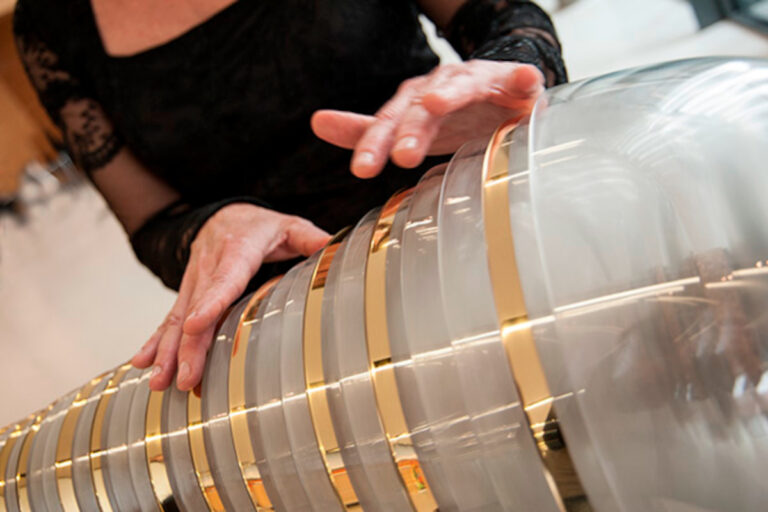
Legends have always told of mysterious sounds that open gates to hidden worlds. The glass harmonica brings this ancient knowledge back – with a vibration that relaxes, harmonizes, and expands consciousness.
Deep Relaxation & Stress Reduction
The crystalline tones of the glass harmonica have a calming effect on the nervous system, helping to reduce stress and find inner peace.
Energetic Harmonization
Its spherical sound brings body, mind, and soul into harmony, promotes self-healing powers, and elevates personal vibration.
Expansion of Consciousness
The unique frequencies of the glass harmonica enable deep meditative states, foster clarity, and open access to new levels of perception.
The Instrument
The History of the Glass Harmonica
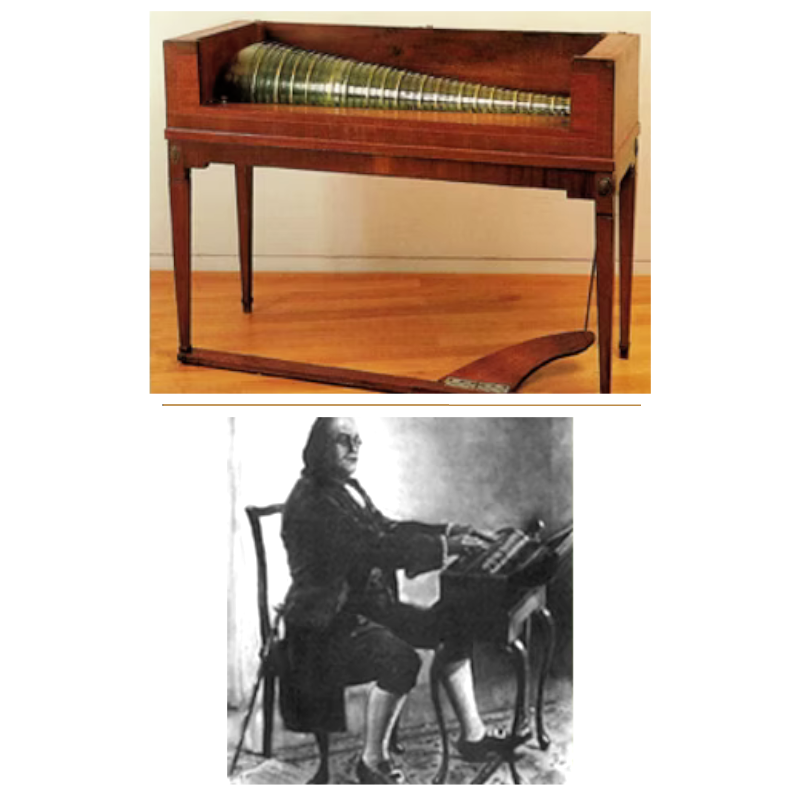
The history of the glass harmonica begins around 1760 in London. Benjamin Franklin invents a magical instrument and names it the glass harmonica. His “new glass machine” is euphorically celebrated in all concert halls across Europe. Mozart pays homage to the glass harmonica with his last chamber music work. Haydn, Salieri, and many others compose for this instrument. Around 1850, the glorious era of the glass harmonica gradually comes to an end.
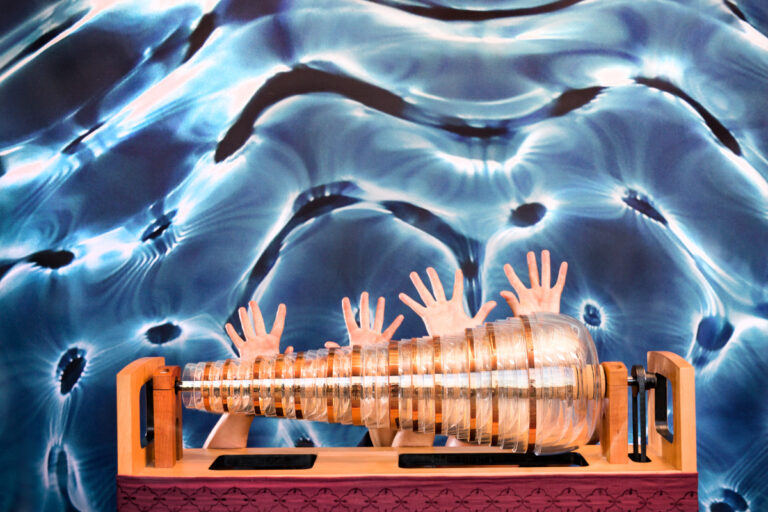
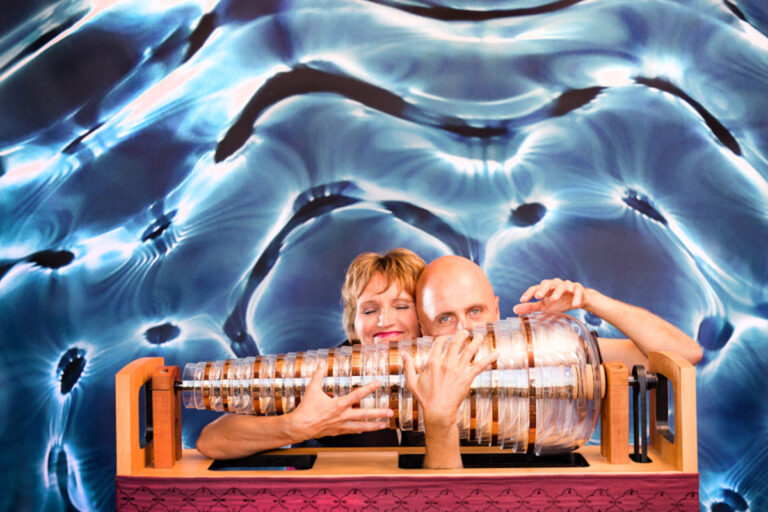
Arriving in the 21st century, the glass harmonica is once again allowed to shine. The renaissance of the glass harmonica is closely linked to the artistic journey of the Vienna Glass Harmonica Duo – Christa and Gerald Schönfeldinger. For 25 years, the Vienna Glass Harmonica Duo has offered its audience a symbiosis of poetic-virtuosic chamber music and meditative soundscapes of unforeseen intensity.
Whether at the Royal Albert Hall London, the Vienna Musikverein, the Salzburg Festival, the Konzerthaus Berlin, the Menuhin Festival Gstaad, Suntory Hall in Tokyo, the Elbphilharmonie Hamburg, or the Kennedy Center Washington: their melodic art from glass inspires, fascinates, and touches.
Benjamin Franklin is Considered the Inventor
Spherical Sounds
Benjamin Franklin was an American diplomat, natural scientist, inventor (including the lightning rod in 1752), and a member of the St. John’s Masonic Lodge. During a stay in London, according to official history, he heard a presentation concert by Edmund Delaval on the Musical Glasses, a precursor instrument to the glass harmonica. This experience inspired him to invent the glass harmonica.
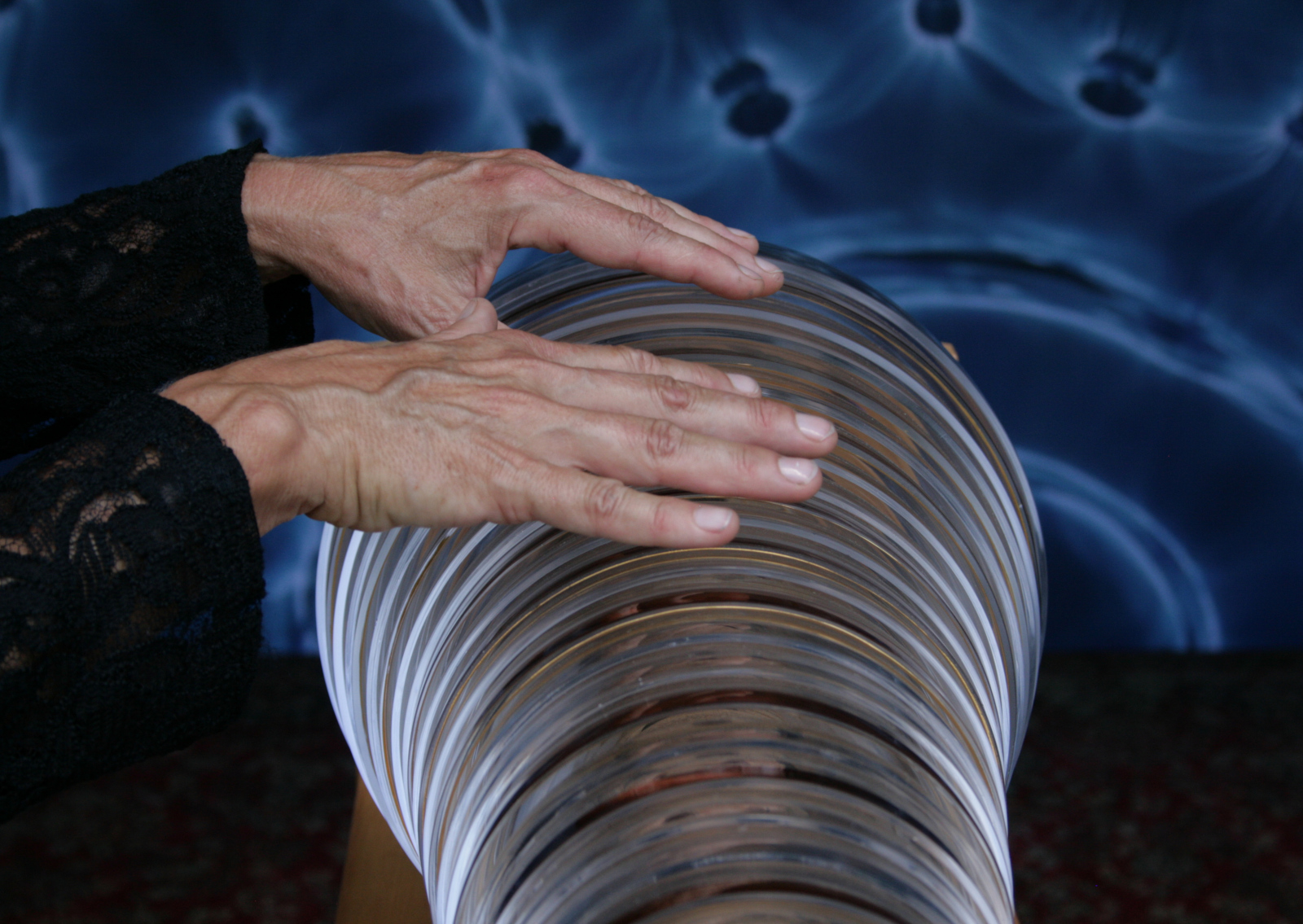
The playing technique had already been introduced by the Musical Glasses; the attachment of individual, approximately hemispherical glass bowls with a neck attachment or hole in the center of their curvature by means of cork stoppers on a horizontal axis was also known as early as 1741 for use in carillons and later in clock chimes. Franklin is generally credited with the idea of rotating the glass bowls, which were on a common axis, with a foot pedal, allowing a single player to perform pieces of piano literature difficulty on the glasses.
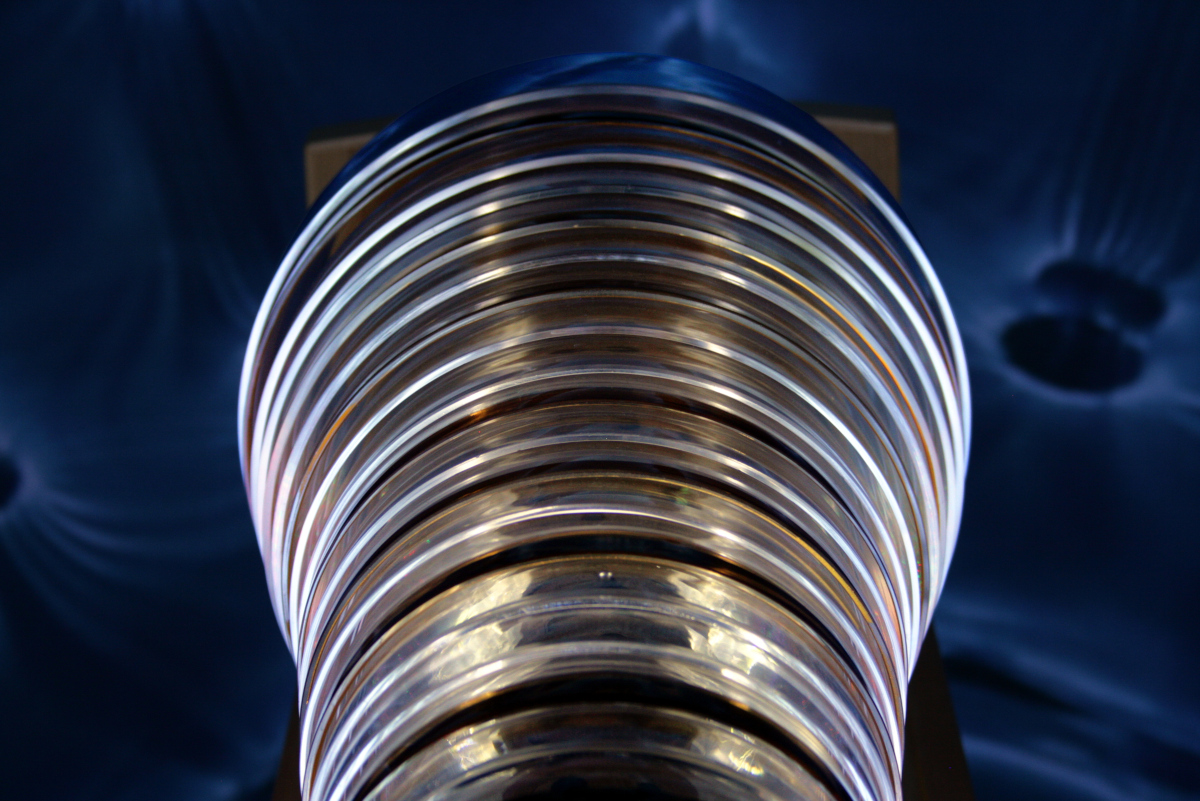
The small distances between the individual nested bowls, whose diameter decreases towards the higher notes, also create playing possibilities comparable to keyboard instruments.
England as the Cradle in the 18th Century
The First Concerts in Spring Gardens
The first concerts on the new harmonica (as Franklin’s Armonica was called after its spread in German-speaking countries) were given by Marianne Davies (1740 – c. 1818), a relative of Franklin, as early as the beginning of 1762 in the Great Room in Spring Gardens and shortly thereafter in Bristol, London, and Dublin. In America, Stephen Forrage was the first to play the harmonica in a public concert in December 1764 at the Assembly Rooms in Lodge Alley / Philadelphia. In 1768, Marianne Davies undertook a concert tour through Europe, particularly to Italy, with her sister, the singer Cecilia Davies (1750-1836). Franklin had specifically lent Marianne Davies an instrument for this purpose. Both sisters are said to have established themselves at the Viennese court with Gluck’s help. They resided with J. A. Hasse, who composed the Cantata pour soprano, harmonica e orchestre for Marianne and Cecilia in 1769.
In the further development of the glass harmonica into a pronounced fashionable instrument, numerous other instruments were soon produced in large numbers, especially in the then German-speaking areas by many manufacturers. In these regions, the raw materials necessary for glass production were abundant, and the techniques of glass processing were correspondingly well developed. The Karlsruhe court Kapellmeister J.A. Schmittbaur was the first to extend the range of his harmonica from c-f” (later c-c”‘) and also taught Mariane Kirchgeßner (1769 – 1808), who was largely blinded at the age of four by smallpox.
In January 1791, she embarked on her first concert tour through Europe with her future companion and patron, the influential music publisher Heinrich Philipp Carl Bossler. Her harmonica concert in Vienna on June 10, 1791, prompted W. A. Mozart to compose a Quintet for Harmonica, Flute, Oboe, Viola, and Cello (KV 617) and a Solo Adagio (KV 617a = KV 356) for her. On August 19, the premiere of KV 617 followed, which was to become the foundation of her ten-year, exceptionally successful virtuoso tour.
Although Mariane Kirchgeßner remained the most famous harmonica player, Pavel Masek was reportedly at least as virtuosic according to critics, while a Carl Schneider from Gotha is described by far as the most accomplished harmonica virtuoso.
Text: Lorenz Duftschmid
Austria as the Cradle in the 21st Century
The First Concerts in Vienna
More than two centuries after its heyday, the glass harmonica is flourishing again in Austria. A living tradition has grown out of southern Burgenland, one that not only cultivates historical works but also opens up contemporary soundscapes. The glass harmonica thus returns to musical awareness not as a curiosity but as a living voice, carried by artists who make its alchemical effect audible once more.
Musical Glasses
The Verrophone
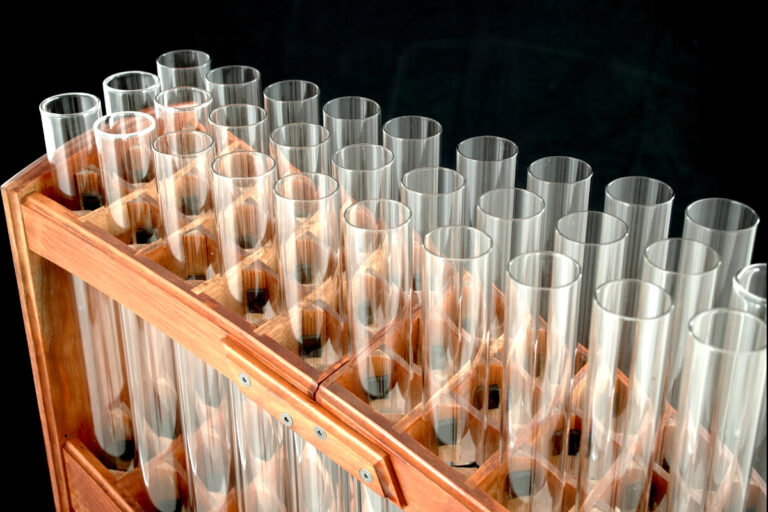
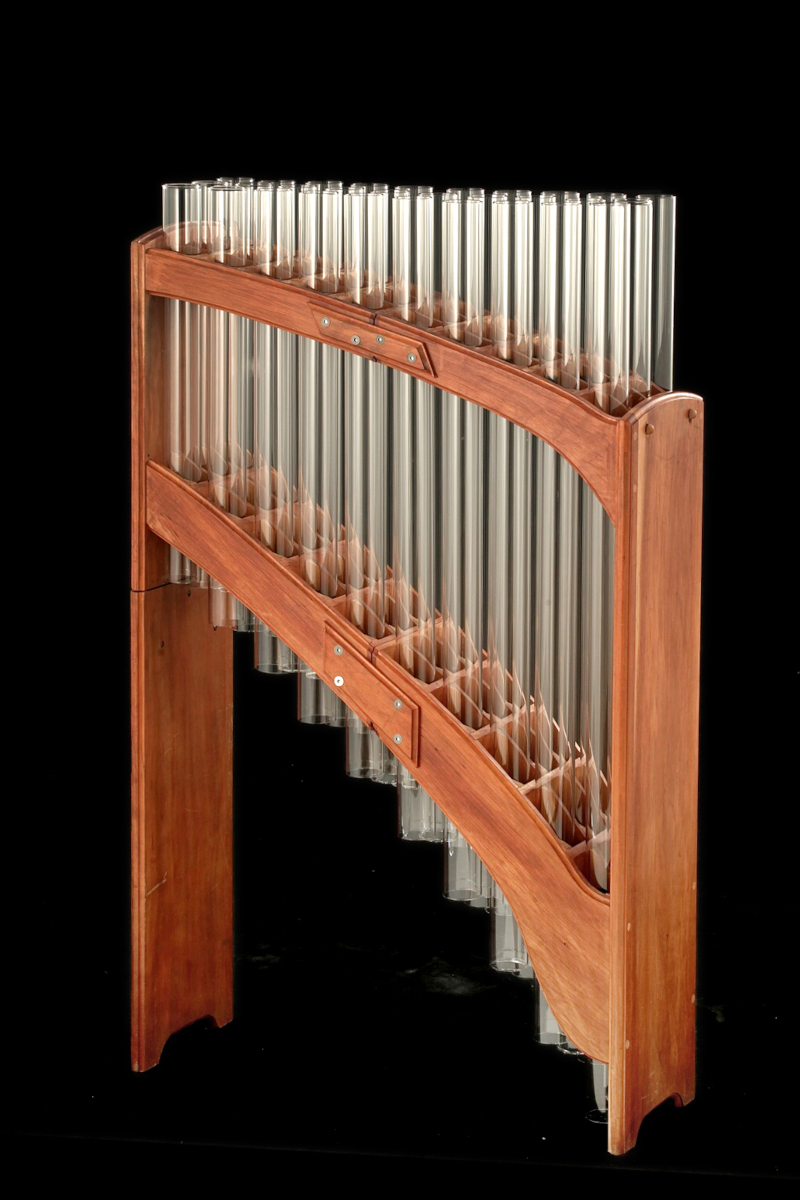
In 1983, instrument maker Sascha Reckert developed a modern form of “musical glasses,” the verrophone. It is similar yet quite different from the glass harmonica.
Glass tubes fixed vertically in a wooden body are played at their upper edges; the glass begins to vibrate, and the sound emerges. The pitch is determined by the length of the tube, the tuning is tempered, and the notes are chromatically arranged.
Used in contemporary literature as an orchestral and solo instrument due to its sound intensity, the verrophone, with its precise, clear timbre, is an ideal complement to the glass harmonica.
The production of the glass harmonica is an elaborate process. If you want to learn more about it, visit the
Schönfeldinger Glass Harmonica Manufactory